| Serving | Weight | Vitamin C (approx.) | vs fresh amla |
|---|---|---|---|
| ¼ teaspoon | ~0.75g | 4.5–5.3 mg | ≈ 2% of one fresh amla |
| ½ teaspoon | ~1.5g | 9–10.5 mg | ≈ 4% of one fresh amla |
| 1 teaspoon | ~3g | 18–21 mg | ≈ 8% of one fresh amla |
| 1 tablespoon | ~9g | 54–63 mg | ≈ 24% of one fresh amla |
| 100g | 100g | 600–700 mg | 2.5× more than fresh amla |
Based on 600–700mg Vitamin C per 100g amla powder. Fresh amla: ~252mg per 100g. Values are approximate and vary by batch.
How much vitamin C is in fresh amla per 100g?
Fresh amla contains 252 mg of vitamin C per 100 g, according to the ICMR-NIN Indian Food Composition Tables (IFCT) 2017 (Gooseberry, Emblica officinalis: 252 ± 30.4 mg total ascorbic acid per 100 g edible portion, n = 5 regional samples). That makes it one of the most vitamin-C-dense fruits measured in the IFCT — well above orange (43 mg/100 g) and on par with guava (222 mg/100 g).
Note: Older ICMR editions and some cultivar-specific studies report values up to ~600 mg/100 g. Vitamin C in amla varies with ripeness, variety, and region — the IFCT 2017 figure is the current nationally analysed reference mean.
How much vitamin C is in one amla?
One fresh amla weighs roughly 8–10 g. Using the IFCT 2017 value of 252 mg per 100 g, a single fruit contains approximately 20–25 mg of vitamin C (about 20–25 mg).
One teaspoon (about 3 g) of Rootiva amla powder contains approximately 50–60 mg of vitamin C. Powder is more concentrated per gram than fresh fruit because dehydration removes water (~87% moisture in fresh amla, IFCT 2017) while low-temperature processing (45–70°C) preserves most of the ascorbic acid. Exact batch values depend on fruit maturity and storage — check your pouch label for verified figures.
Looking to try it? Shop amla powder from Rootiva Organic — whole dehydrated Indian gooseberry, no additives.
Does drying amla destroy its vitamin C content?
Drying always removes water, which concentrates vitamin C per gram of powder — but heat during drying can also destroy ascorbic acid. Ascorbic acid degrades noticeably above ~70°C and rapidly at spray-drying temperatures (150–200°C).
Rootiva uses low-temperature dehydration at 45–70°C, staying below the threshold where vitamin C breaks down quickly. Published comparisons of drying methods show that low-temperature and freeze-drying retain substantially more vitamin C than hot-air or spray drying — in some studies, retention at 50°C is roughly 85–95% versus under 50% above 80°C (Huang et al., 2021). High-heat methods used for some commercial amla powders can lose half or more of the original vitamin C.
How does amla vitamin C compare to oranges and guava?
| Source (per 100 g) | Vitamin C |
|---|---|
| Fresh amla (Indian gooseberry) | 252 mg |
| Guava (pink flesh) | 222 mg |
| Orange (pulp) | 43 mg |
| Lemon (juice) | 48 mg |
Fresh amla delivers roughly 6× the vitamin C of orange by equal weight (IFCT 2017). Values are for fresh fruit; amla powder per 100 g is far higher because water is removed.
Frequently Asked Questions
How much vitamin C is in amla powder?
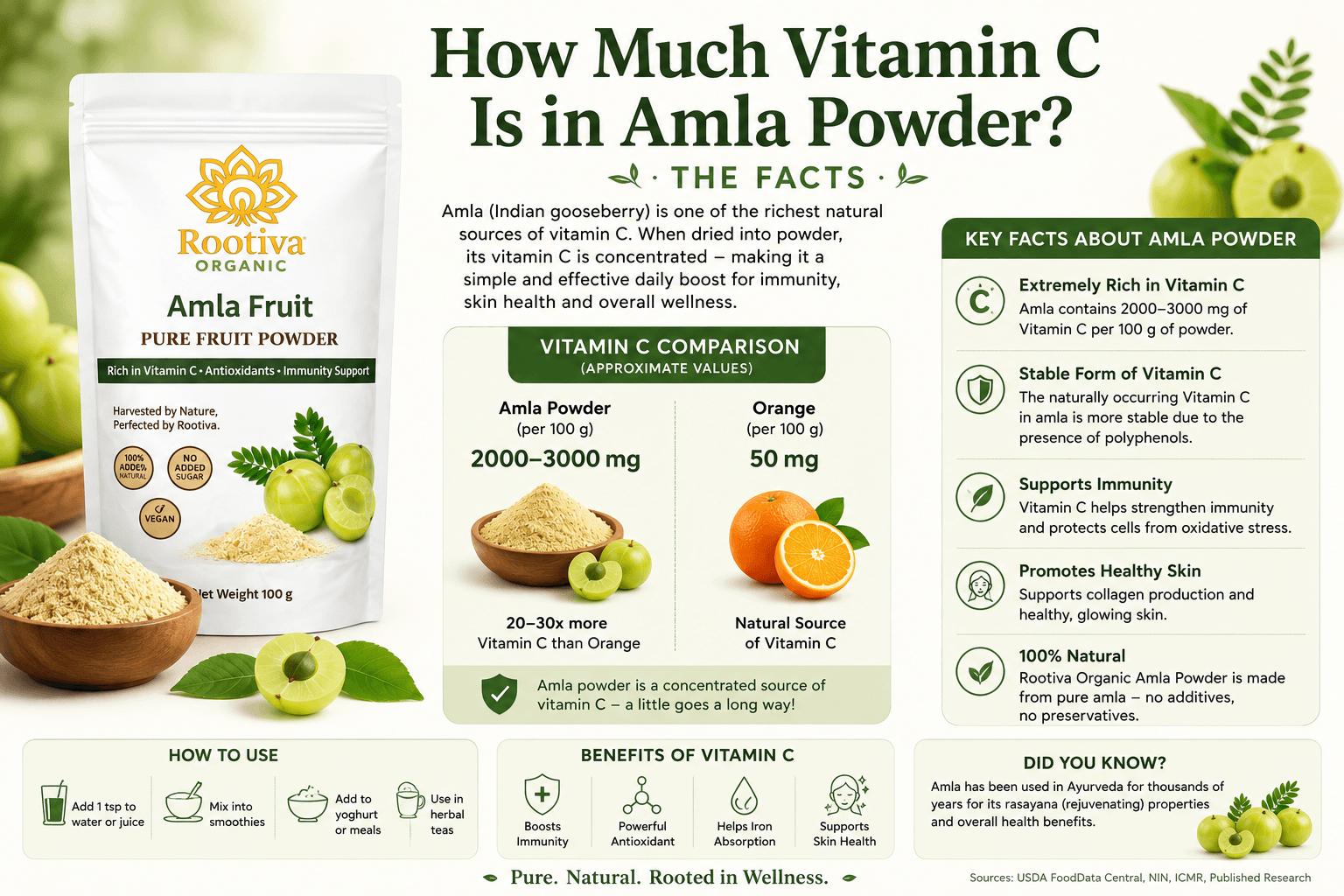
Amla powder is more concentrated than fresh fruit because water is removed during drying. Based on ICMR-NIN IFCT 2017 values for fresh gooseberry (252 mg vitamin C per 100 g) and typical low-temperature retention, one teaspoon (about 3 g) of Rootiva amla powder provides roughly 50–60 mg of vitamin C. Per 100 g of powder, expect roughly 1,700–2,000 mg — several times higher than fresh amla per 100 g, because the powder contains little moisture.
Does boiling amla destroy vitamin C?
Yes. Vitamin C (ascorbic acid) is heat-sensitive and degrades rapidly above about 70°C. Boiling amla or adding amla powder to boiling water can destroy a large share of its vitamin C within minutes. For maximum retention, use amla in cold or room-temperature preparations, or add powder only after liquids have cooled below 70°C.
Is amla a good source of vitamin C?
Yes. Fresh amla (Indian gooseberry) contains 252 mg of vitamin C per 100 g according to ICMR-NIN Indian Food Composition Tables 2017 — roughly six times the vitamin C in an equal weight of orange pulp (43 mg per 100 g, IFCT 2017) and more than most common fruits. One small amla (about 8–10 g) delivers roughly 20–25 mg of vitamin C.
What is kasturi haldi?
Kasturi haldi (kasturi manjal) is wild turmeric from Curcuma aromatica — traditionally used topically in face packs and ubtan, not for cooking. Learn more about Kasturi Haldi Powder.
Shop Amla Powder
Rootiva Organic amla powder is made from whole dehydrated Indian gooseberry — no additives, no fillers.