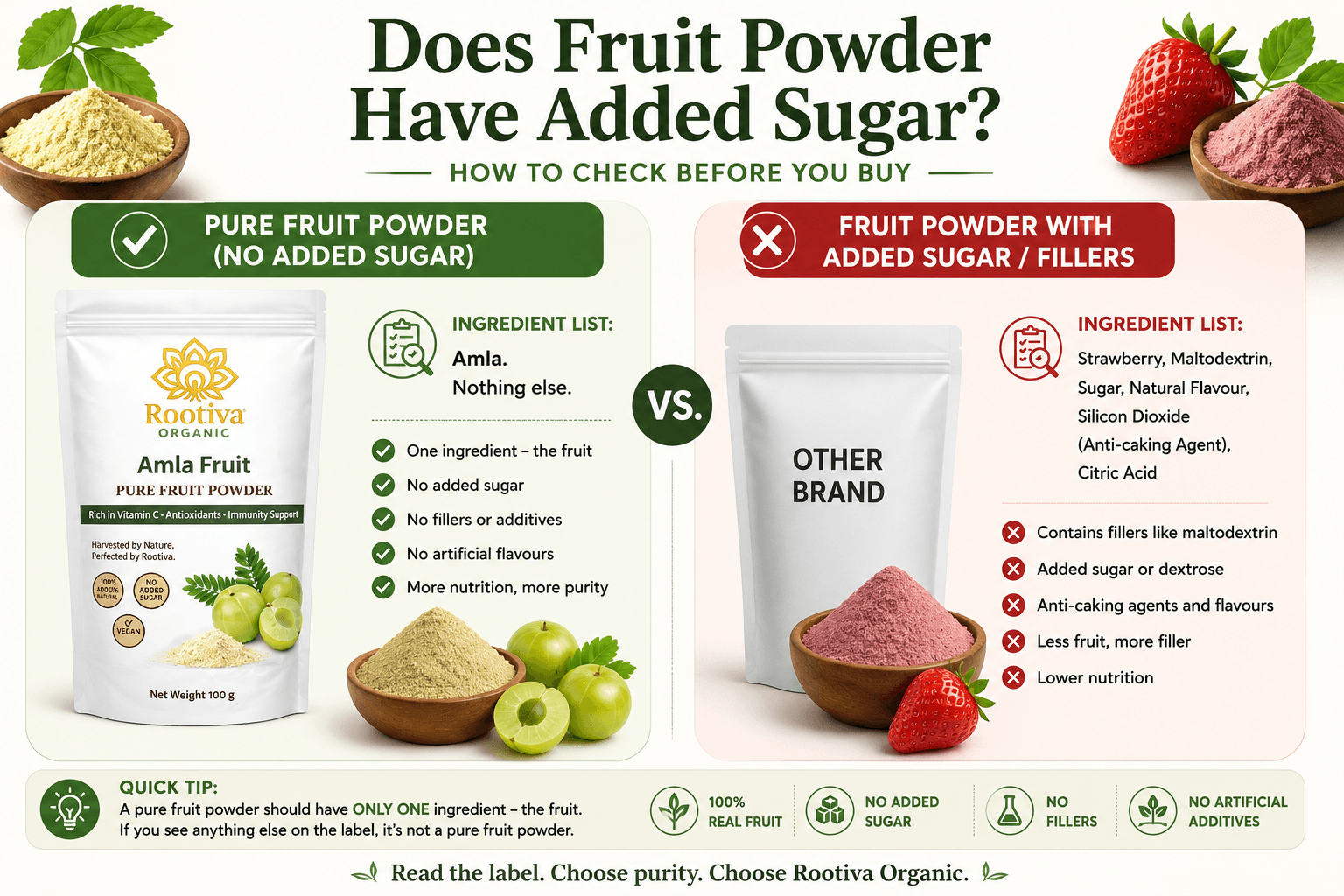
Not all fruit powders are the same. Some are pure dehydrated fruit — one ingredient, nothing added. Others are composite products that include maltodextrin (a starch-derived filler), added sugar, anti-caking agents, or artificial flavour. The difference matters significantly for nutrition and for uses where purity is important.
How to check if a fruit powder has added sugar
The fastest check is the ingredient list. A pure fruit powder should read: [Fruit name]. Nothing else.
If the ingredient list includes any of the following, it is not a pure fruit powder:
- • Maltodextrin
- • Dextrose or glucose
- • Silicon dioxide (anti-caking agent)
- • Sugar or sucrose
- • Natural flavour or artificial flavour
Why some manufacturers add maltodextrin
Spray-dried fruit powder requires a carrier to absorb the liquid during the high-heat drying process. Maltodextrin is the most common carrier. It has a very high glycaemic index and essentially no nutritional value. Its presence in fruit powder is a sign that the product was spray-dried industrially rather than low-temperature dehydrated.
Rootiva Organic's ingredient lists
Every Rootiva Organic product contains one ingredient — the fruit. Amla powder: amla. Beetroot powder: beetroot. Strawberry powder: strawberry. No exceptions.
Frequently asked questions
Is the natural sugar in fruit powder harmful?
The natural sugars in fruit powder are the same fructose and glucose found in whole fruit — they come packaged with fibre, which slows absorption. Used in the recommended quantities (1–2 teaspoons), the sugar contribution is comparable to eating a small serving of the fresh fruit.
Is maltodextrin in fruit powder dangerous?
Maltodextrin is considered safe by food regulators. However, it has a very high glycaemic index (higher than table sugar) and no nutritional benefit. Its presence in a fruit powder product simply means you are getting less actual fruit per gram and more filler.