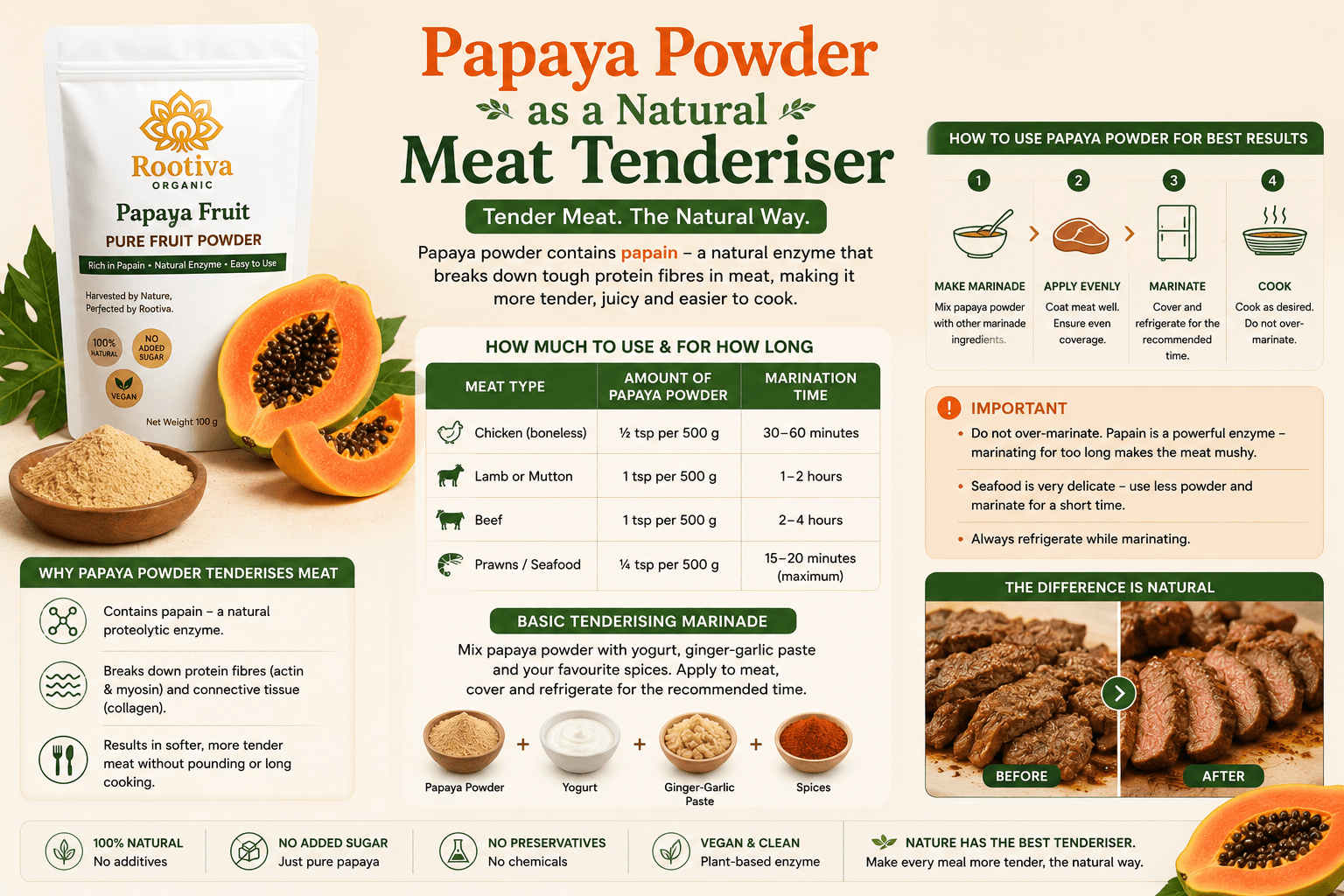
Papaya powder contains papain — a naturally occurring proteolytic enzyme that breaks down the protein structure of meat, making it more tender. This is the same enzyme used in commercial meat tenderising products, in its natural whole-fruit form. Using papaya powder as a marinade ingredient is one of the oldest cooking techniques in Indian and Southeast Asian cuisines.
How does papain in papaya powder tenderise meat?
Papain targets the protein fibres (actin and myosin) and connective tissue (collagen) in meat. When the enzyme contacts the meat surface, it begins breaking down these tough structures. The result is softer, more tender meat without the need for mechanical pounding or long marination times.
How to use papaya powder as a tenderiser
| Meat type | Amount of papaya powder | Marination time |
|---|---|---|
| Chicken (boneless) | ½ tsp per 500g | 30–60 minutes |
| Lamb or mutton | 1 tsp per 500g | 1–2 hours |
| Beef | 1 tsp per 500g | 2–4 hours |
| Prawns / seafood | ¼ tsp per 500g | 15–20 minutes (maximum) |
Important: Do not over-marinate. Papain is a powerful enzyme — marinating for too long (overnight) makes the meat mushy rather than tender. Seafood is particularly sensitive and needs very short contact time.
Basic tenderising marinade: Mix papaya powder with yogurt, ginger-garlic paste, and your spices of choice. Apply to meat, cover, and refrigerate for the recommended time.
Frequently asked questions
Is papaya powder tenderiser the same as raw papaya paste?
They work through the same enzyme (papain), but papaya powder is more concentrated and easier to measure consistently. Raw papaya paste — made by grating unripe green papaya — is the traditional method and is equally effective.
Does papaya powder leave a taste on the meat?
At the amounts used for tenderising (½–1 teaspoon per 500g), papaya powder adds a negligible flavour to the final cooked dish, especially when combined with other marinade ingredients.