How much iron is in amla powder per serving?
| Serving | Iron content | % RDA (adult women: 18 mg/day) |
|---|---|---|
| ½ teaspoon (1.5g) | ~0.015–0.03 mg | <1% |
| 1 teaspoon (3g) | ~0.03–0.06 mg | <1% |
| 1 tablespoon (9g) | ~0.09–0.18 mg | ~1% |
| 100g | ~1–2 mg | 5–11% |
Amla powder is not a significant direct source of iron. Its value in iron nutrition is indirect — via Vitamin C-enhanced absorption. See our amla Vitamin C guide for per-serving figures.
Why does Vitamin C matter for iron absorption?
Iron from plant sources (non-haem iron) is far less bioavailable than iron from meat (haem iron). The gut absorbs haem iron at 15–35% efficiency; it absorbs non-haem iron at only 2–10% without help.
Vitamin C (ascorbic acid) is the most effective known enhancer of non-haem iron absorption. It reduces iron from its ferric form (Fe³⁺) to its ferrous form (Fe²⁺) and chelates iron to prevent it binding to inhibitors like phytates in grains and legumes.
| Vitamin C provided | Effect on iron from a plant-based meal | |
|---|---|---|
| Without amla powder | 0 mg | Baseline iron absorption |
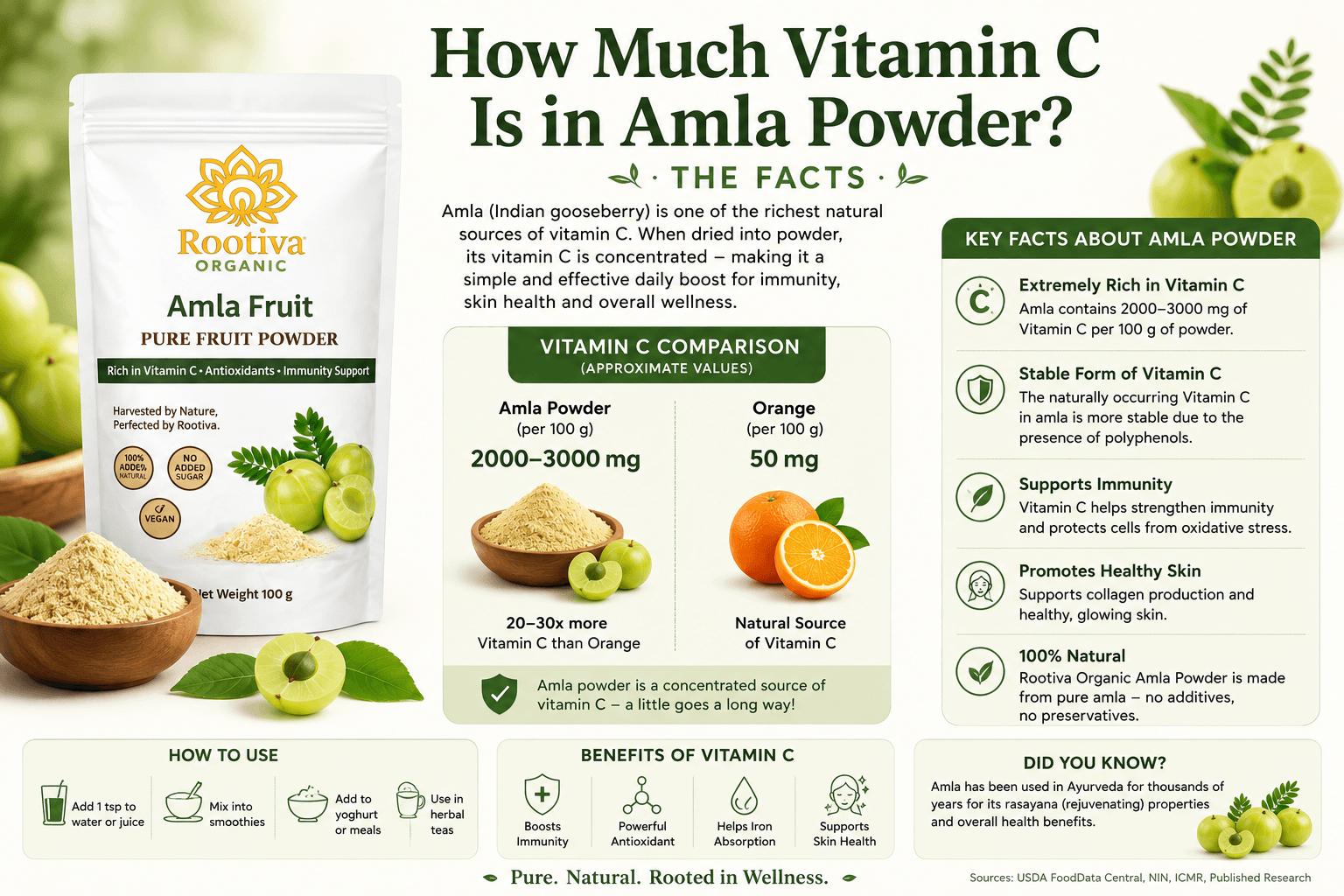
| With amla powder (1 tsp, 3g) | ~18–21 mg Vit C | Measurable increase in iron absorption |
| With 1 tbsp amla powder | ~54–63 mg Vit C | Significant increase in iron absorption |
Published research shows that even 25–50 mg of Vitamin C consumed alongside an iron-rich meal can increase non-haem iron absorption by 2–3 times. One teaspoon of amla powder provides this dose.
How do you use amla powder to support iron absorption?
Vitamin C must be consumed in the same meal as the iron-rich food to enhance absorption — not hours apart.
| Combination | Why it works |
|---|---|
| Amla powder + dal (lentils) | Lentils are rich in non-haem iron; amla Vit C enhances its absorption |
| Amla powder + spinach smoothie | Spinach has ~3.6 mg iron per 100g; amla Vit C improves uptake |
| Amla powder + rajma / chickpeas | High phytate legumes benefit most from Vit C co-consumption |
| Amla powder + fortified cereal | Vit C offsets absorption inhibitors in processed grains |
Simple method: Add ½–1 tsp amla powder to a glass of water or juice and drink it with your main iron-containing meal.
Frequently asked questions
Is amla good for iron deficiency anaemia?
Amla is not a treatment for anaemia. Its direct iron content is small. However, its exceptionally high Vitamin C content makes it a useful dietary companion to iron-rich plant foods, improving how efficiently your body absorbs the iron already in your diet. Consult a doctor if you have diagnosed anaemia — diet alone may not be sufficient.
Which has more iron — amla powder or spinach powder?
Spinach powder is significantly higher in iron content. However, spinach also contains oxalates that inhibit iron absorption. Amla powder's Vitamin C actually helps overcome iron inhibitors like oxalates, making the combination useful — take amla alongside spinach rather than instead of it.
Does heating amla powder destroy its Vitamin C?
Yes — Vitamin C degrades at high temperatures. Add amla powder after cooking, not during, to preserve its Vitamin C content. Mix into a finished drink, yogurt, or cooled dish rather than adding to a hot pan.
How much amla powder should I take daily?
For general health and as an iron-absorption enhancer, ½–1 teaspoon (1.5–3g) per day is a typical culinary dose. More concentrated amounts (1 tablespoon, 9g) can also be used. Large amounts (more than 2–3 tablespoons) may cause gastrointestinal discomfort in some people due to the high Vitamin C content.